

 Tiếng Việt
The volley technique is one of the most crucial elements that allows players to take control of the game when positioned near the net in Pickleball. Executing a perfect volley not only helps you control the pace of the match but also creates pressure on your opponent without requiring excessive strength. In this article, we will explore the three key factors for performing an effective volley: the correct paddle grip, proper stance near the net, and the precise execution of the volley itself. Let’s dive in and discover how to enhance your Pickleball skills today!
Introduction to Volley Technique in Pickleball
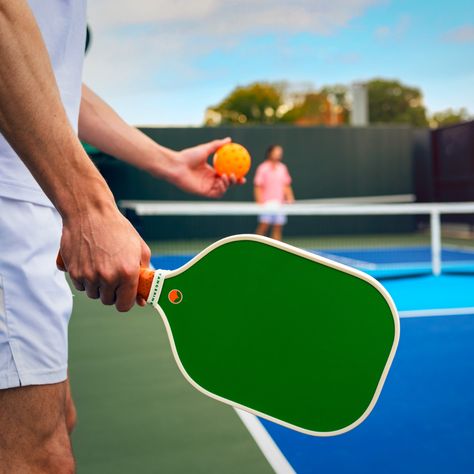
In the sport of Pickleball, the volley technique is one of the most crucial elements that enables players to control the match, especially when positioned near the net. The basic techniques of the volley allow you to both attack and defend, reducing your opponent’s chances to counterattack. While it may sound simple, executing a proper and effective volley requires a combination of several key factors, such as correct posture, proper grip technique, and quick reflexes.
In fact, performing a volley does not require excessive strength. What is truly important is having the right stance, using the power from your wrist and forearm, and having sharp reflexes to react to the ball. The volley is not a powerful shot like a forehand or backhand, but rather a more refined technique that allows players to actively attack or defend when the ball is near the net.
Correct Grip Position

A fundamental aspect of executing a successful volley in Pickleball is having the proper grip on your paddle. The grip plays a critical role in controlling the ball’s speed and direction while minimizing unnecessary movements. One of the most common grips used in volleying is the Continental grip. This grip resembles the way you would hold a hammer, and it’s effective for both forehand and backhand volleys. It provides flexibility, allowing players to transition quickly between different types of shots without needing to adjust the grip.
When you grip your paddle, ensure that it’s in the ready position in front of your body, with the face of the paddle slightly angled upward and perpendicular to the floor. This ready position ensures that you’re prepared for any ball coming towards you, whether it’s fast, slow, or spinning. Your wrist should remain relaxed. A relaxed wrist helps you respond more quickly and gives you the freedom to adjust the angle of the paddle to suit different shots. Keeping the paddle in front of your body allows for quick reactions and more controlled shots.
By holding the paddle correctly with a relaxed wrist, you not only achieve better ball control, but you also reduce the chances of fatigue and strain during the game.
Proper Stance Close to the Net
Another crucial factor in executing a successful volley is maintaining the proper stance when positioned near the net. The way you stand affects your balance, your ability to move quickly, and your readiness to respond to fast incoming shots. The key is to be prepared for quick movements while keeping your body balanced and ready to react.
When standing near the net, position yourself about 5-10 cm away from the no-volley line (also known as the “kitchen line”). Your feet should be shoulder-width apart for stability, and your weight should be slightly shifted forward onto the balls of your feet. This position ensures that you’re ready to move in any direction quickly. Your knees should be slightly bent, giving you flexibility and agility. This stance enables you to crouch or spring up quickly when necessary, allowing you to react to the ball with precision and speed.
Keep your eyes on the ball at all times. Whether the ball is coming fast or with spin, you need to track its path in order to make the best decision on how to volley it back. Additionally, hold your paddle close to your chest, keeping it in the ready position, so you can execute a quick volley without hesitation.
Executing a Perfect Volley
The volley is a quick, precise shot, and it differs significantly from other strokes like forehands or backhands. One of the key differences is that, with a volley, you don’t swing your arm like you would with a forehand or backhand. Instead, a volley requires a quick, controlled movement, with the focus on small, fast motions rather than big swings. The power for a volley comes primarily from the wrist and forearm, not the shoulder or torso.
When volleying, you should use the paddle to absorb the ball’s force rather than hitting it with excessive power. If your opponent is hitting a powerful shot towards you, it’s best to softly cushion the ball with the paddle, allowing it to drop just over the net. This tactic puts pressure on your opponent, forcing them to deal with a low and difficult shot.
To make an attacking volley, you can tighten your wrist slightly and angle the paddle downwards, making the ball travel faster and drop more sharply onto your opponent’s side. This makes the shot more difficult to return, especially if you place it strategically in a corner or close to the net.
Common Mistakes When Performing a Volley and How to Avoid Them
-
Swinging too hard: One common mistake is trying to hit the ball too hard, like you would with a forehand or backhand. This can cause you to lose control over the shot, and it won’t be as precise. Instead, focus on making quick, controlled touches rather than big swings. By using a smaller motion, you’ll be able to keep the ball closer to the net and reduce your opponent’s chances of returning the ball.
-
Tensing the wrist: Another mistake players often make is tensing their wrist when they prepare to volley. A tense wrist prevents quick movements and reduces your control over the ball. Always keep your wrist relaxed to allow for more fluid movement and better touch when volleying.
-
Lack of balance: A common mistake, especially for beginners, is failing to maintain good balance when standing close to the net. It’s important to stay centered with your weight slightly forward and knees bent. This will help you react quickly to the ball and move efficiently without losing your balance.
By focusing on these key aspects, you can improve your volley technique and make it more effective during your matches.
Tips from Thunder Experts
-
Keep the movement compact and quick: A volley is all about precision. Don’t try to swing your arms like with other shots; focus on making short, quick movements.
-
Avoid using power from the shoulders or torso: The best volleys come from the wrist and forearm. Relying too much on the shoulders or torso can make the shot less controlled and harder to execute.
-
Move with small steps: Small, quick steps will help you stay in control and adjust your position easily. Avoid taking large strides, as this can make you lose balance when trying to react to unexpected shots.
-
Practice both forehand and backhand volleys: To make it difficult for your opponent to predict your next move, practice volleys on both sides (forehand and backhand). This versatility makes you more unpredictable and harder to play against.
Conclusion
The volley technique is one of the most critical skills in Pickleball, allowing you to dominate when positioned near the net. It doesn’t require excessive strength but rather relies on precision, quick reflexes, and proper technique. By mastering the three key elements of grip, stance, and execution, you can become a much more effective player, applying pressure to your opponent and gaining control over the game.
Remember to practice with a focus on short, controlled movements, and always keep your wrist relaxed. As you develop your volley technique, you’ll be able to anticipate the ball’s path more effectively and respond faster, ensuring that you’re always a step ahead in the game.
Keep practicing, stay consistent, and soon you’ll notice your volley skills improving, making you a more confident and skilled Pickleball player. Enjoy the game and keep striving for excellence!
 Hotline: 0888 853 676 Website: https://thundersport.vn/ Facebook: Thunder Pickleball Instagram: thunder.pickleball